

Religious Culture in Rhodes: Churches, Mosques and a Living Synagogue
Table of Contents
Religious culture in Rhodes is written into the streets
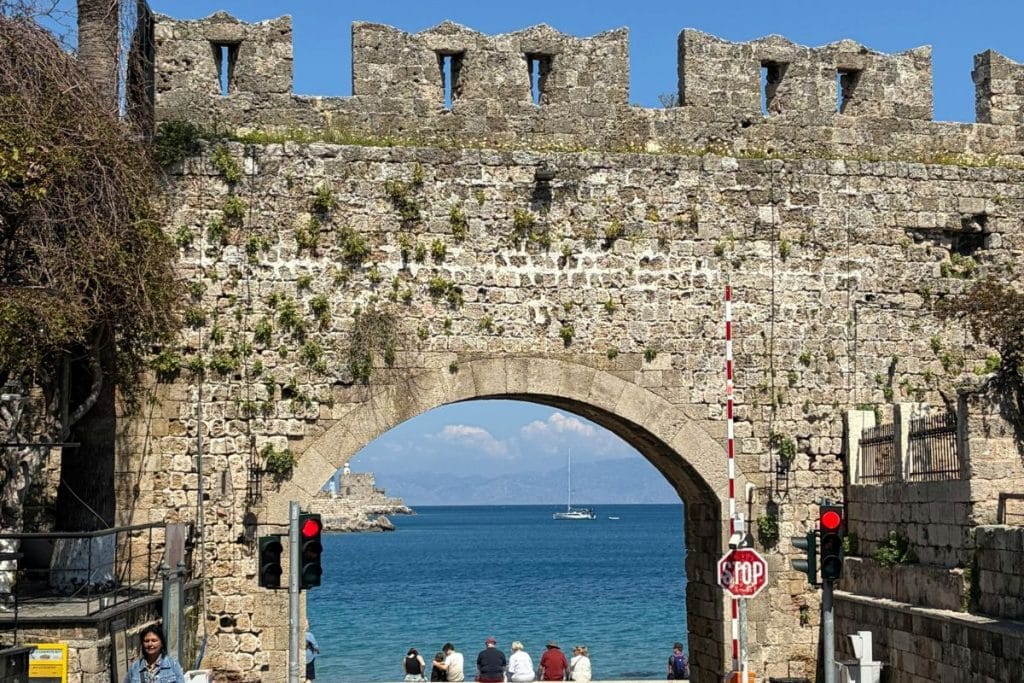
Religious culture in Rhodes is not something visitors meet only inside churches or museums. It is visible in the shape of the Old Town, in the reuse of buildings, in small courtyards, in stone doorways, in minarets, in icons, in fountains and in the quiet Jewish lanes near the southeast corner of the medieval city.
That is what makes Rhodes different from a destination where religion belongs to one monument or one period. The island’s sacred history was shaped by ancient cults, Byzantine Christianity, the Knights of St John, Ottoman Islam, Sephardic Jewish life and modern Greek Orthodox tradition. These layers do not sit neatly apart. In Rhodes, they often stand a few minutes from one another.
For a traveller, this matters because the religious culture in Rhodes explains why the island feels so layered. A church may have been altered under the Knights, converted during Ottoman rule, used later as a museum, and still carry traces of all these lives in its walls. Understanding that rhythm changes the way you walk through the island.
A sacred island before the medieval city
Long before Rhodes became famous for its medieval walls, the island had sacred landscapes connected to ancient Greek worship. Lindos is the clearest example. Its acropolis rises above the sea not only because it is dramatic, but because height, visibility and protection mattered. The sanctuary of Athena Lindia was tied to the identity of the city-state, to seafaring, and to the way people understood divine protection in a maritime world.
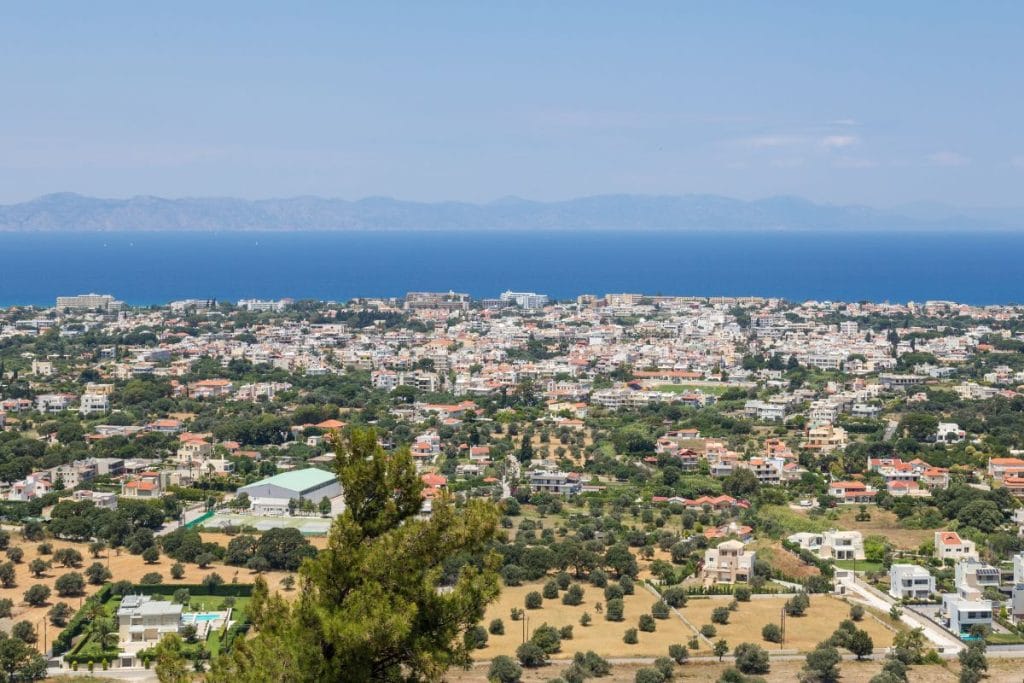
Filerimos, above Ialyssos, works in a similar way. The hill looks over the northwestern coast, and its setting helps explain why religious life gathered there across different periods. Ancient remains, Christian tradition and later monastic history all share the same elevated landscape. Rhodes often places faith where the land itself already feels significant: on hills, near harbours, beside walls, or on routes where people passed regularly.
This older sacred geography is worth remembering because later religions did not arrive on an empty island. They inherited places that already carried meaning. The result is not a simple replacement of one faith by another, but a long sequence of reuse, adaptation and memory.
Byzantine churches and the habit of reuse
The Byzantine layer of Rhodes is one of the most important for understanding the island’s religious culture. Churches were not only places of worship; they were also markers of community, authority and continuity during centuries of shifting political control.
One of the best examples is Panagia tou Kastrou inside the Medieval Town. It was originally built as a Byzantine church, later took the form of a Gothic basilica, and was converted into a mosque during the Ottoman period. Today it houses an exhibition of icons and medieval sculpture. That single building shows how sacred space in Rhodes often changed function without losing its earlier identity.
This is a pattern throughout the Old Town. Instead of seeing each religious building as belonging to one frozen moment, it is more useful to see it as a document that was edited over time. Walls, arches, apses, inscriptions and floor levels often tell more than a simple label outside the door.
The Knights of St John and the Christian city as fortress
The arrival of the Knights of St John in the early 14th century gave Rhodes one of its most recognisable religious and architectural identities. The Order was both military and religious, and that dual role shaped the city. Rhodes was not only defended by walls; it was organised around a Christian military order with its own hierarchy, rituals, hospitals, inns and symbols.
The Street of the Knights, the Palace of the Grand Master and the great hospital of the Order are usually described as medieval landmarks, but they also belong to the religious culture of Rhodes. The Knights did not separate faith from governance or defence. Their city was a place where prayer, medicine, warfare and diplomacy existed inside the same fortified system.
This is why guided interpretation can be useful in parts of Rhodes Old Town. Without context, the buildings can look like impressive stone architecture. With context, they become evidence of a religious order trying to hold a strategic island at the edge of the eastern Mediterranean.
Ottoman Rhodes and the Islamic layer of the Old Town
After the Ottoman conquest, Rhodes did not become a new city built from scratch. It became a city with another religious layer added to what already existed. Many churches were converted into mosques, while new mosques, baths, fountains and domestic spaces changed the daily rhythm of the Old Town.
The Mosque of Suleiman is one of the most visible reminders of this period. Other Ottoman monuments, including mosques, hammams and fountains, show how Islamic culture entered the urban fabric not only through worship, but also through water, washing, neighbourhood life and public space.
This is where religious culture in Rhodes becomes especially interesting. The Ottoman period did not erase the medieval city; it adapted it. Visitors who walk only looking for the Knights may miss the Islamic details that explain how the city continued to live for centuries after 1522.
Jewish Rhodes and the memory of La Juderia
The Jewish heritage of Rhodes gives the island one of its most moving cultural layers. The Jewish Quarter, often known as La Juderia, sits inside the Old Town and preserves a quieter atmosphere than the main tourist streets. It is not a large area, but it carries a history that reaches far beyond its size.
The Kahal Shalom Synagogue, built in 1577, is widely recognised as the oldest synagogue in Greece and the only remaining synagogue on Rhodes still used for services on special occasions and during periods when the community gathers. Its Sephardic character connects Rhodes to the wider eastern Mediterranean world, especially to Jewish communities that moved after the expulsions from Iberia.
This part of Rhodes asks for a different kind of attention. It is not only about architecture. It is about memory, absence and survival. The Jewish Museum of Rhodes and the synagogue courtyard help visitors understand a community that was once central to the life of the island and was devastated during the Second World War.
Greek Orthodox life beyond monuments
Not all religious culture in Rhodes belongs to famous buildings. Much of it appears in everyday Orthodox life: small chapels, icons beside roads, village churches, feast days, candles, family rituals and the way religious calendars still shape local time.
A visitor may notice this more clearly outside the busiest parts of Rhodes Town. In villages, churches often sit close to the main square or on a hill above the settlement. They are not only historic buildings; they are social anchors. Weddings, baptisms, memorials and feast-day gatherings keep religious tradition connected to family and place.
This living side of faith is important because it prevents Rhodes from becoming only an open-air museum. The island’s sacred past is old, but its religious culture is not dead. It continues in gestures that are small, local and easy to miss if the trip is planned only around major attractions.
How to visit religious sites in Rhodes with respect
Religious sites in Rhodes are not all the same kind of place. Some are active places of worship, some are museums, some are archaeological sites, and some are monuments that have changed function several times. The way you visit should change with the setting.
- Dress modestly when entering active churches, monasteries, mosques or synagogues.
- Avoid loud conversation, especially if people are praying or a service is taking place.
- Check opening hours before visiting smaller museums or religious monuments.
- Treat Jewish heritage sites as places of memory, not only as sightseeing stops.
- Look carefully before taking photos; some interiors or religious objects may have restrictions.
- Give yourself time. Sacred spaces in Rhodes often reveal their history through details rather than scale.
Where religious culture changes the experience most
There are several places where an understanding of religious culture can completely change a visit to Rhodes. Rhodes Old Town is the first. It is easy to walk through it as a medieval attraction, but its churches, converted mosques, Ottoman additions and Jewish quarter reveal a much more complex story.
Lindos is another. The acropolis above the village is not only a viewpoint. It is a sacred and defensive landscape shaped by ancient worship, later fortification and the relationship between sea routes and religious identity.
Filerimos also deserves slow attention because it brings together ancient, Christian and later devotional layers on a single hill. It is not as immediately famous as Lindos, but it helps explain how sacred places in Rhodes often depended on landscape as much as architecture.
The most rewarding route is not necessarily the one with the most stops. It is the one that lets the visitor understand why a site was sacred, why it was reused, and why its meaning changed without disappearing.
How this topic can connect naturally to Island Tour content
This article can connect naturally to cultural walks in Rhodes Old Town, guided interpretation around the Grand Master’s Palace, storytelling routes connected to the Knights, visits to Lindos, and slow cultural experiences that help travellers understand the island beyond beaches and viewpoints.
The links should be added only where the text already mentions a relevant place or experience. For example, a reference to the Knights can support a cultural Old Town route, a section on Lindos can support a Lindos visit, and a paragraph about layered religious architecture can support a guided cultural walk. The article should remain about religious culture first; the links should simply help the reader continue the journey.
Final thought: Rhodes rewards visitors who notice continuity
The religious culture in Rhodes is not a single story of one faith replacing another. It is a story of continuity, adaptation and survival. Ancient sanctuaries, Byzantine churches, Hospitaller buildings, Ottoman mosques and Jewish heritage all exist within the same island memory.
That is why Rhodes is best understood slowly. The most meaningful details are not always the largest monuments. Sometimes they are a converted doorway, a quiet courtyard, a fountain, an icon, a street name, or a building whose purpose changed but whose presence remained.