

East Coast Rhodes: Beaches, Bays and Coastal Villages from Kalithea to Lindos
Table of Contents
East Coast Rhodes is not one place
East Coast Rhodes is often spoken about as if it were a single beach area, but that misses the point. This side of the island changes gradually as you move south: city edges give way to Italian-era spa architecture, then wide resort beaches, quieter coves, fishing villages, long open stretches of coast and, finally, the white village of Lindos rising above the sea.
That is what makes the east coast useful for travelers. It can be a simple beach day, a scenic road trip, a slow coastal swim route or a full-day itinerary with history, food and sea views. The key is not to treat it as a checklist. The east coast works best when you understand its rhythm: short distances in the north, beach stops in the middle, and a more dramatic landscape as the road approaches Lindos.
Why the east coast became the easier side of Rhodes to explore
The east coast of Rhodes is generally calmer than the west when it comes to sea conditions, which is one reason many visitors naturally gravitate toward it for swimming, boat days and family-friendly beach time. The road also makes sense for planning: from Rhodes Town, you can follow the coast south in a fairly direct line, stopping at places that feel different without changing the entire mood of the day.
This matters if you are trying to plan without overcomplicating your holiday. You do not need to cross the whole island to feel a change of scenery. In one route, East Coast Rhodes can give you architecture, beaches, small bays, inland village detours and one of the island’s most photographed historic sites.
Kalithea — the first sign that the coast has a story
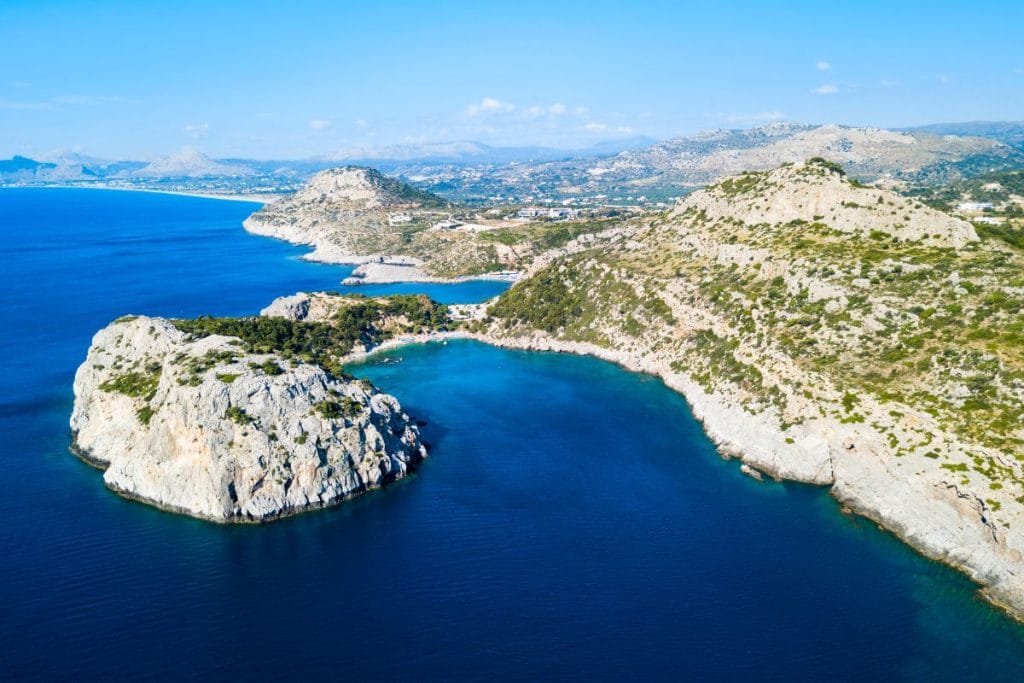
Kalithea is one of the best places to understand that the east coast is not only about beaches. The restored spa complex, built during the Italian period, sits directly above the sea and gives the area a different atmosphere from a standard swimming stop. Arches, courtyards, stone paths and sea platforms make it feel designed rather than accidental.
For travelers staying in Rhodes Town, Kalithea is also a gentle introduction to the east coast because it is close enough for a short visit. You can come for a swim, but the setting encourages a slower pace: walking through the architecture, noticing how the stone frames the water, and understanding why this part of the coast has been valued for more than just sunbathing.
Faliraki and the wide-beach middle of the coast
Faliraki has a different role. It is not the quietest part of the island, and that is exactly why it works for certain travelers. The beach is long, accessible and practical, with plenty of space, services and straightforward swimming. If Kalithea feels atmospheric, Faliraki feels functional: easy to reach, easy to understand and easy for groups or families who do not want logistics to dominate the day.
It is also a useful reminder that not every stop on the east coast has to be hidden or romantic. Sometimes the best choice is the place that removes friction. If you are traveling with children, meeting friends, or planning a simple beach afternoon, this stretch can make more sense than chasing a smaller cove with limited space and parking.
Ladiko and Anthony Quinn Bay — where the coast becomes more intimate
South of Faliraki, the coastline starts to feel more enclosed. Ladiko Bay and nearby Anthony Quinn Bay are smaller, rockier and more photogenic, with water that often looks deeper in color because of the shape of the bay and the surrounding stone. These are the kinds of places that make visitors slow down without needing much explanation.
They are not ideal if your idea of a beach day is endless sand and empty space. They work better for people who enjoy clear water, a more dramatic setting and shorter swims between rocks and small beach areas. In high season, they can become crowded, so timing matters. Early morning or later afternoon gives the bays more of the atmosphere people imagine before they arrive.
Afandou and Kolymbia — the coast opens up again
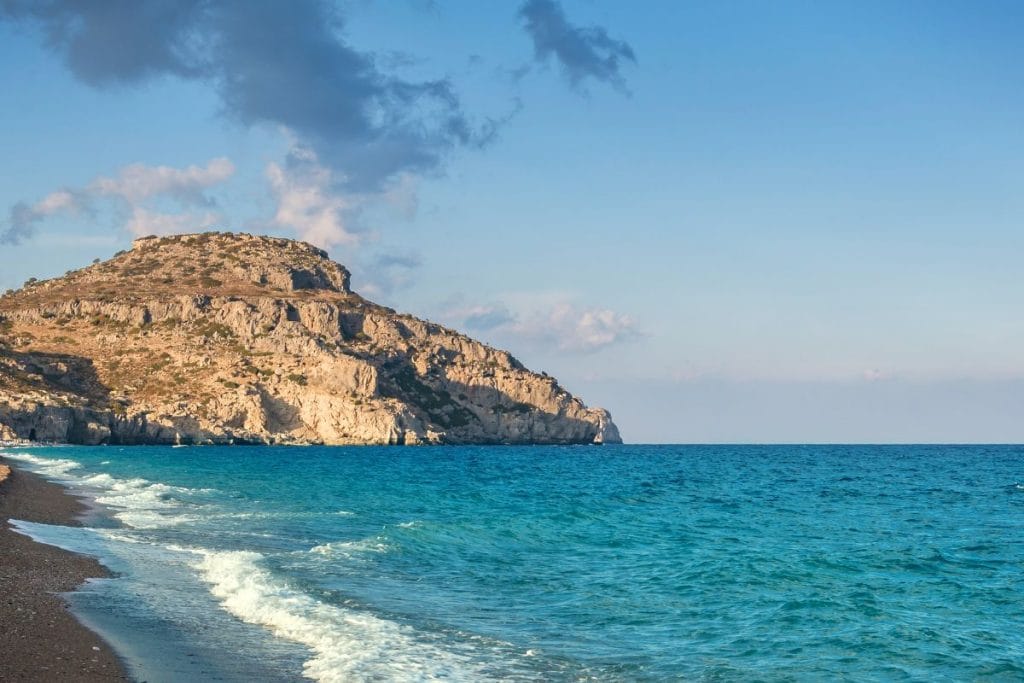
After the smaller bays, the coast opens again around Afandou and Kolymbia. This part of East Coast Rhodes feels less theatrical but more spacious. Afandou Beach is long and open, while Kolymbia sits between sea access and inland roads that lead toward places like Seven Springs. That combination makes the area useful for travelers who want a day that is not only beach-based.
This is where the east coast becomes flexible. You can keep the day simple with swimming and lunch, or you can add a nature stop, a short drive inland, or a slower route toward the south. It is not always the most famous part of the coast, but it helps connect the island’s resort geography with its quieter interior.
Tsambika and Stegna — beaches with a village feeling nearby
Tsambika Beach is one of the east coast’s most recognizable sandy stretches, backed by hills and overlooked by the monastery above. It has the open, classic beach feel many travelers expect from Rhodes: golden sand, clear water and enough space to spend several hours without feeling trapped in a small cove.
Stegna, nearby, has a more local and lived-in mood. It is the kind of coastal village where the day naturally becomes slower: a swim, a meal close to the water, another walk, then perhaps one more stop before driving on. It does not need to be dramatic to be memorable. Its value is that it feels like part of the island’s daily coastline, not only a place arranged for visitors.
Lindos — where the east coast becomes historic
Lindos changes the scale of the route. After beaches and bays, the village appears as a white settlement below a fortified acropolis, with the sea on both sides and St Paul’s Bay nearby. This is where East Coast Rhodes stops being only coastal scenery and becomes a landscape shaped by history, trade, religion and defense.
A visit to Lindos works best when it is not rushed. The village lanes, the climb toward the acropolis, the views over the bays and the light on the white houses all need time. If you only arrive for a quick photo, Lindos can feel crowded and overly polished. If you give it a few hours, it becomes easier to understand why this site mattered long before modern tourism made it famous.
The best way to plan East Coast Rhodes
The mistake many visitors make is trying to do every famous east-coast stop in one day. Technically, it is possible. Emotionally, it is not always worth it. The coast is better when you choose a style of day rather than forcing every stop into the route.
- Choose a short coastal day if you are staying in Rhodes Town: Kalithea, Faliraki or Ladiko can work without turning the day into a long drive.
- Choose a beach-focused day if swimming is the priority: Tsambika, Stegna or Afandou allow more time in the water and less time moving around.
- Choose a scenic full day if you want variety: combine one atmospheric stop, one beach, one meal and Lindos.
- Choose a slower couple or small-group route if atmosphere matters more than quantity: Kalithea, a quiet bay, Stegna and sunset near Lindos can feel more complete than a crowded checklist.
When the east coast is the right choice
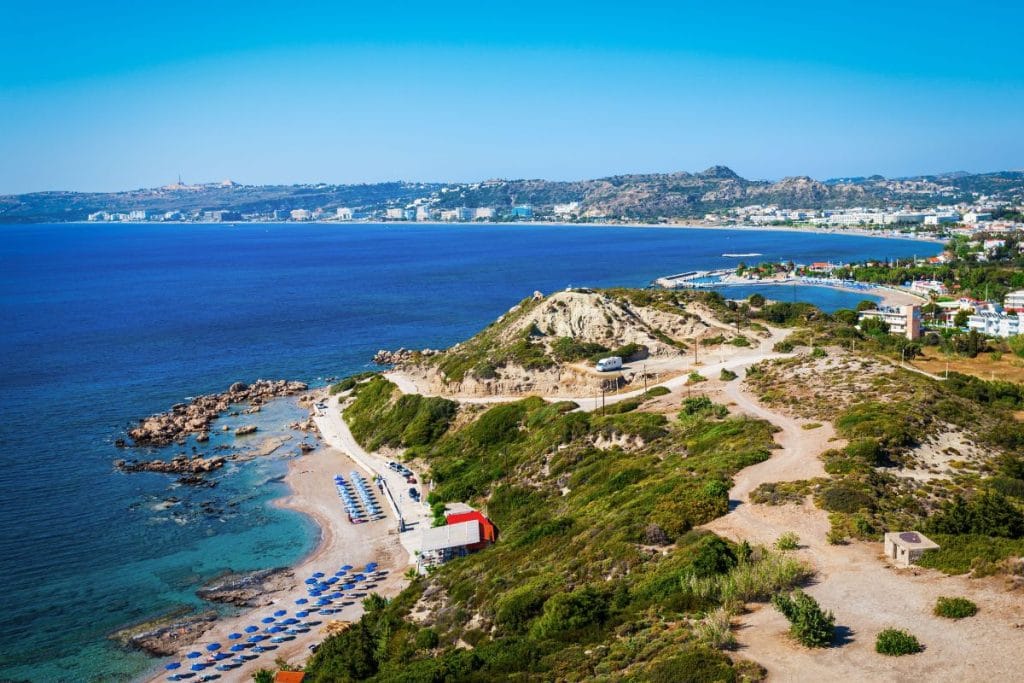
East Coast Rhodes is especially useful for first-time visitors because it delivers many of the island’s strengths in one readable route. It has beaches without making the day only about swimming. It has history without requiring a museum-heavy schedule. It has places that work for families, couples, groups and independent travelers, depending on how far south you want to go.
It is also a good choice when the plan needs to stay flexible. You can turn the day into a short swim escape, a half-day coastal drive or a full-day route toward Lindos. That flexibility is the reason the east coast appears again and again in Rhodes itineraries: it adapts to the traveler instead of demanding one fixed style of trip.
What to avoid on the east coast
The east coast is easy to overpack. Because many places look close on the map, it is tempting to add one more beach, one more bay and one more village. That usually turns a good route into a series of parking stops. The better approach is to choose fewer places and give them enough time to feel different from each other.
It is also worth thinking about heat and timing. Lindos is exposed, small bays can feel crowded in the middle of the day, and popular beaches are at their best when you are not arriving at the same time as everyone else. A good east-coast day is not only about where you go, but when you go.
Final thought: the east coast rewards travelers who move slowly
East Coast Rhodes is not just the beach side of the island. It is a route where the island gradually reveals different versions of itself: architectural, practical, intimate, local, open, historic and scenic. The coast works because it lets you adjust the day without losing the thread.
For travelers who want one part of Rhodes that can hold swimming, scenery, history and a sense of movement, the east coast is one of the easiest places to start. The secret is not to see all of it. It is to choose the part of the coast that matches the day you actually want to have.